

Empowering Mental Health Blog:
Insights & Support
The power of words will be encapsulated within the pages of the blog. At Wiit & Wisdom Blog I am dedicated to creating a safe, informative and inspiring space for anyone navigating the complexities of mental health. Whether seeking insights, practical advice or support this blog is here to provide valuable articles, resources and foster a sense of community.
Articles & Insights will explore a wide range of topics, from understanding mental health conditions to tips for self-care and resilience. Articles will be thoughtfully curated to empower, educate, and reduce stigma around mental health conversations.
Support Services will provide discovery or reminder of accessible mental health resources, organizations and tools that will provide guidance for you and your loved ones to support a journey to relative healing. Whether you require a crisis hotline or therapy options the connection will be offered here!
Personal Reflections & Input will be evident in the blog to share with you my personal mental health advocacy. Personal stories, learned lessons and my own insights will be expressed to highlight you don’t travel alone in your journey.
Mental Health-Themed Merchandise is a part of the business and tee shirts with meaningful mental health themes are designed to raise awareness start conversations and and contribute to breaking down stigma. a portion of proceeds will support mental health initiatives making every purchase part of a larger cause.
Why Do We Even Care? Mental health affects so many of us, and understanding is key to living a balanced and fulfilling life. This site wants to normalize discussions, provide resources, and encourage individuals to embrace their journeys with compassion. Let us value building a community with empathy, education and empowerment. together we can make a difference,
Explore, connect and Share-because mental health matters!Quotes
A quote means to repeat the exact words of a speaker or an author and also the passage or statement that is repeated. It means to cite something as a form of proof!
Do not take criticism from someone you would not trust for advice’! Unknown
‘Mental illness is not the sum total of a person’! Unknown
‘Mental illness is nothing to be ashamed of, but stigma and bias shame us all’'! Jean Holthaus Nd
‘Behind every sweet smile, there is a bitter sadness that no one can ever see and feel
Comparison is the thief of Joy! Roosevelt
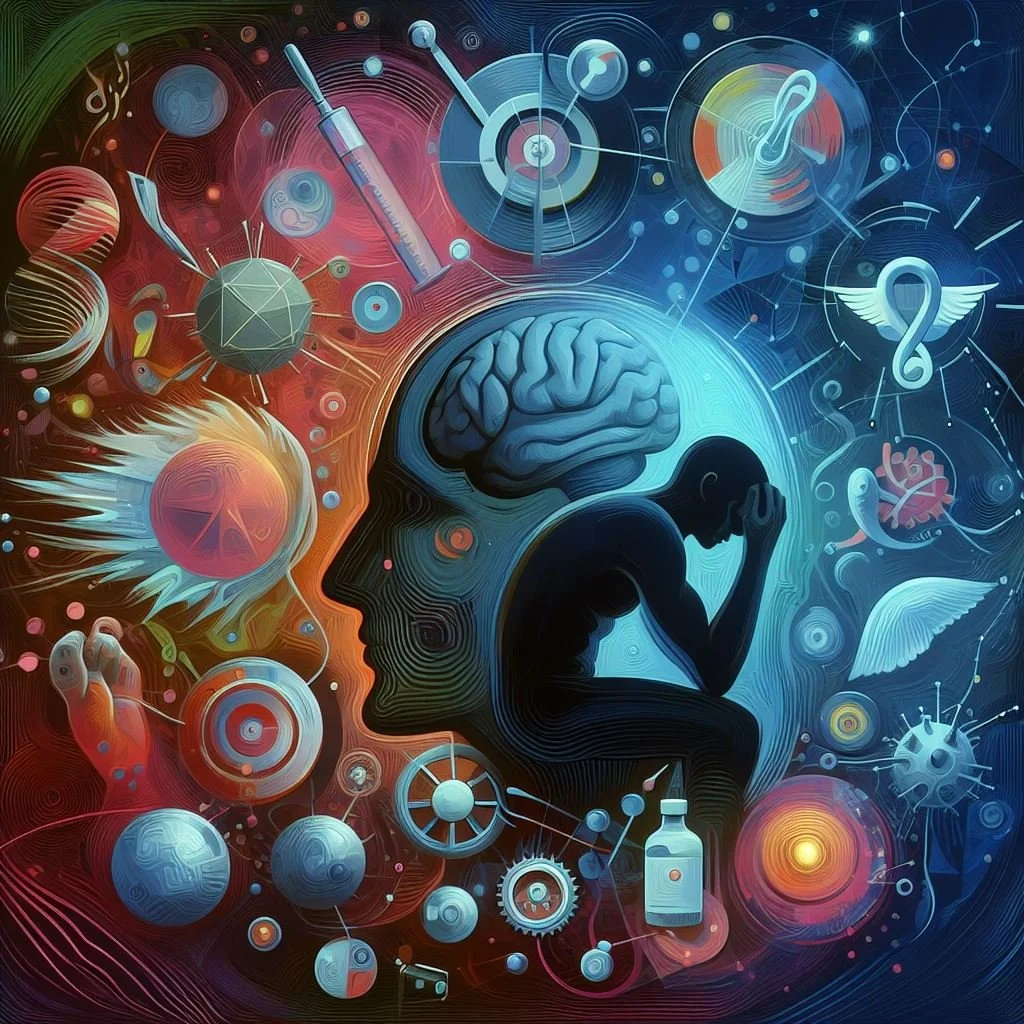
For years, medication has stood at the front line of mental health care - a steady anchor in turbulent waters, It helps stabilize mood, reduce symptoms and create enough ground for people to begin again. But the landscape is expanding.
New research and lived experience are mapping out additional pathways alongside medication. Therapies that reshape thinking patterns, like psychotherapy, are gaining ground. So too are approaches that reconnect body and mind through movement, the subtle but powerful influence of the gut-brain axis, and the everyday rhythms of sleep, nutrition, and human connection.
Treatment is no longer a single road. It is becoming a network. Medication may still light the path, but it now walks alongside therapy, lifestyle shifts, community and evolving science. Together they form a living system of care, one that adapts to the individual. Less like a prescription, more like a map that redraws itself as healing unfolds. The strongest outcomes come from layering supports that work across mind, body and environment.
Therapy at its core is about rewiring. Approaches like Cognitive Behavioral Therapy (CBT), Acceptance and Commitment Therapy (ACT), and trauma-focused therapies do not aim to silence thoughts or emotions. They help people change their relationship with them.
WHY?
Think of it as upgrading the operating system, not just muting notifications. The mind is not static. It shifts with stress, relationships evolve, identity reshapes over time. there is no final version of being human.
Conditions like depression and anxiety often develop quietly, without warning. Therapy becomes both an early intervention and an emotional gym, strengthening resilience before crisis hits. You do not wait for collapse to build strength.
WHEN?
The new rhythm of therapy is this”:
Not only in crisis…but in the in-between.
The old model said: Go when things fall apart.
The better model says: Go when something feels slightly off.
Go during transition, whether that is a new job, loss, recovery, or even success.
Go when life is shifting, because that is when the mind is most open to change.
WHERE?
Where does therapy happen? Everywhere. Anywhere your therapist is.
Therapy is no longer confined to the office couch. It moves with you.
Today therapy lives in;
in-person sessions
telehealth platforms
guided apps like headspace or BetterHelp
HOW: Layered, flexible, human.
Therapy is not meant to stay at full intensity forever. It shifts and adapts over time:
-weekly to fortnightly to monthly check-ins
-deep work to maintenance to recalibration
-talk therapy + tools + reflection
Approaches like Cognitive Behavioral therapy and acceptance-based therapies do not just work in the room, they equip people with skills to continue using between sessions and carry it forward.
Therapy is not the session. it is what follows you out of the room!
Social connection is the quiet kind of superpower, while true loneliness slowly corrodes the human spirit.
Loneliness vs Aloneness
A space that feels too quiet can create the sense that something is missing, even when others are nearby. You can feel lonely in a crowd, at a dinner table or while scrolling endlessly.
It is not how many people are present. It is about whether you feel seen, understood or emotionally held.
Loneliness is the absence of connection. Aloneness, however can be something entirely different
Chosen solitude can be restorative. It allows thoughts to stretch, creativity to surface and the nervous system to settle. It is not emptiness, it is space.
Some people do not need a wide social circle to feel fulfilled. One or two meaningful connections can outweigh countless surface level interactions.
The difference is simple:
Loneliness says: “I wish I was not here by myself”.
Aloneness says: I am okay being here by myself”.
The same quiet room can hold either feeling.
The difference lies in what is happening within.
Movement is often underestimated as a form of medicine. Regular physical activity has measurable effects on mood, anxiety and cognitive function. Walking, strength training or yoga can be as effective as mild antidepressants for some people. Even a daily short walk can act as a reset button for the mind
Sleep is foundational to mental health. Poor sleep can trigger or worsen conditions like depression and anxiety disorders yet it is often overlooked. Improving sleep hygiene-with consistent bed times, limiting of screen times and calming routines creates positive ripple effects across mental health treatments.
Nutrition & the Gut-Brain Connection
Nutrition fuels both body and mind. When we eat poorly we often feel the effects mentally as well. The gut and brain are in constant communication through a complex feedback system involving the vagus nerve, hormones, stress pathways, immune responses and gut bacteria.
-serotonin precursors (mood regulation)
-Dopamine related compounds (motivation/reward)
-Fatty acids (reduce inflammation, affect brain signaling).
These substances can directly influence mood, thinking and stress responses. In fact a large portion of serotonin is produced in the gut not the brain.
Remember it is less about perfection, more about patterns.
Therapy Part 1
For years, medication has stood at the front line of mental health care - a steady anchor in turbulent waters, It helps stabilize mood, reduce symptoms and create enough ground for people to begin again. But the landscape is expanding.
New research and lived experience are mapping out additional pathways alongside medication. Therapies that reshape thinking patterns, like psychotherapy, are gaining ground. So too are approaches that reconnect body and mind through movement, the subtle but powerful influence of the gut-brain axis, and the everyday rhythms of sleep, nutrition, and human connection.
Treatment is no longer a single road. It is becoming a network. Medication may still light the path, but it now walks alongside therapy, lifestyle shifts, community and evolving science. Together they form a living system of care, one that adapts to the individual. Less like a prescription, more like a map that redraws itself as healing unfolds. The strongest outcomes come from layering supports that work across mind, body and environment.
Therapy at its core is about rewiring. Approaches like Cognitive Behavioral Therapy (CBT), Acceptance and Commitment Therapy (ACT), and trauma-focused therapies do not aim to silence thoughts or emotions. They help people change their relationship with them.
WHY?
Think of it as upgrading the operating system, not just muting notifications. The mind is not static. It shifts with stress, relationships evolve, identity reshapes over time. there is no final version of being human.
Conditions like depression and anxiety often develop quietly, without warning. Therapy becomes both an early intervention and an emotional gym, strengthening resilience before crisis hits. You do not wait for collapse to build strength.
WHEN?
The new rhythm of therapy is this”:
Not only in crisis…but in the in-between.
The old model said: Go when things fall apart.
The better model says: Go when something feels slightly off.
Go during transition, whether that is a new job, loss, recovery, or even success.
Go when life is shifting, because that is when the mind is most open to change.
WHERE?
Where does therapy happen? Everywhere. Anywhere your therapist is.
Therapy is no longer confined to the office couch. It moves with you.
Today therapy lives in;
in-person sessions
telehealth platforms
guided apps like headspace or BetterHelp
HOW: Layered, flexible, human.
Therapy is not meant to stay at full intensity forever. It shifts and adapts over time:
-weekly to fortnightly to monthly check-ins
-deep work to maintenance to recalibration
-talk therapy + tools + reflection
Approaches like Cognitive Behavioral therapy and acceptance-based therapies do not just work in the room, they equip people with skills to continue using between sessions and carry it forward.
Therapy is not the session. it is what follows you out of the room!
Social connection is the quiet kind of superpower, while true loneliness slowly corrodes the human spirit.
Loneliness vs Aloneness
A space that feels too quiet can create the sense that something is missing, even when others are nearby. You can feel lonely in a crowd, at a dinner table or while scrolling endlessly.
It is not how many people are present. It is about whether you feel seen, understood or emotionally held.
Loneliness is the absence of connection. Aloneness, however can be something entirely different
Chosen solitude can be restorative. It allows thoughts to stretch, creativity to surface and the nervous system to settle. It is not emptiness, it is space.
Some people do not need a wide social circle to feel fulfilled. One or two meaningful connections can outweigh countless surface level interactions.
The difference is simple:
Loneliness says: “I wish I was not here by myself”.
Aloneness says: I am okay being here by myself”.
The same quiet room can hold either feeling.
The difference lies in what is happening within.
Movement is often underestimated as a form of medicine. Regular physical activity has measurable effects on mood, anxiety and cognitive function. Walking, strength training or yoga can be as effective as mild antidepressants for some people. Even a daily short walk can act as a reset button for the mind
Sleep is foundational to mental health. Poor sleep can trigger or worsen conditions like depression and anxiety disorders yet it is often overlooked. Improving sleep hygiene-with consistent bed times, limiting of screen times and calming routines creates positive ripple effects across mental health treatments.
Nutrition & the Gut-Brain Connection
Nutrition fuels both body and mind. When we eat poorly we often feel the effects mentally as well. The gut and brain are in constant communication through a complex feedback system involving the vagus nerve, hormones, stress pathways, immune responses and gut bacteria.
-serotonin precursors (mood regulation)
-Dopamine related compounds (motivation/reward)
-Fatty acids (reduce inflammation, affect brain signaling).
These substances can directly influence mood, thinking and stress responses. In fact a large portion of serotonin is produced in the gut not the brain.
Remember it is less about perfection, more about patterns.

The Unexpected Genius of anxiety: it is not a Bug, it is a feature!
Your bodies anxiety isn’t a glitch-it is a masterpiece of evolutionary engineering. The genius lies in the lies in the Anxiety Loop, a rapid-fire communication system that instantly your physiology from calm to crisis-ready!


Step into Psychosis-A Break With Reality
Introducing a blog about psychosis! The word may seem scary but really it is just misunderstood. Psychosis is not a character flaw, it is a mental health experience where a person’s thoughts and perceptions are disrupted. Knowledge is power-the more we understand, the less we fear! Read & learn. #psychosisawareness #MentalHealthAwareness

Start At The Beginning of Stigma
“The Stigma I Didn’t See-Until It Was Me”
At sixteen, I was sent on a work experience placement at a mental hospital. I did not choose it-it was assigned. And truthfully, I did not want it. I walked through those doors with all the assumptions the outside world had handed me: people with mental illness were unpredictable, fragile and maybe even dangerous.

Who is Really in Charge of Mental Health Support
Who is really in charge of mental health in Australia?


